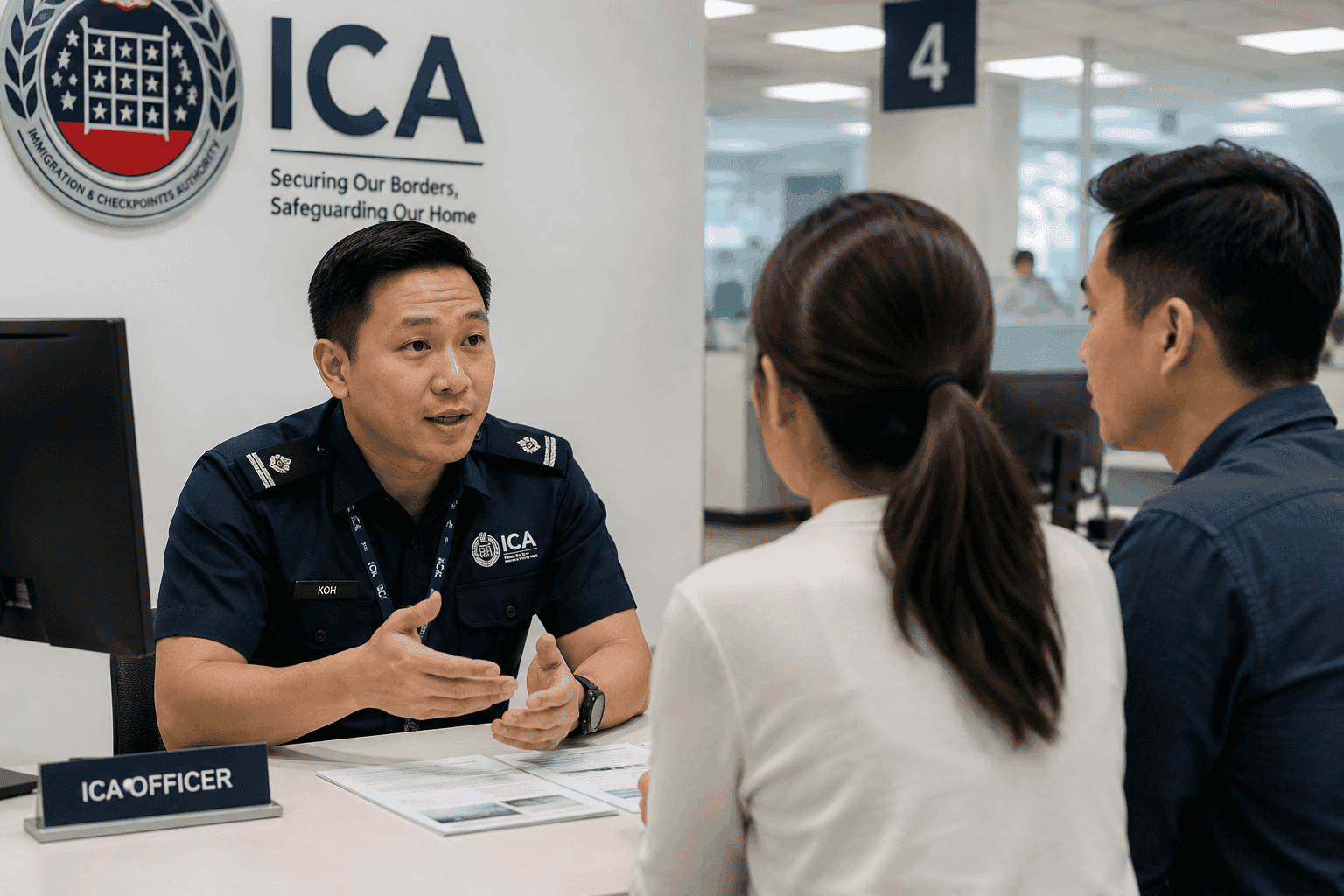
Every year, a significant number of applications to the Immigration & Checkpoints Authority face delays not because of missing documents, but because of translation errors that could have been avoided. Whether you are applying for Permanent Residency, registering a marriage, enrolling a child in school, or submitting supporting documents for a citizenship application, the quality and format of your translated documents matters more than most applicants realise.
ICA document translation in Singapore is not simply a linguistic exercise. It is a procedural one, and the standards are precise.
Common reasons translations are rejected
One of the most frequent problems involves documents that are translated but not properly certified. ICA expects translations to be accompanied by a signed declaration from a qualified translator confirming their competency and the accuracy of the translation.
Many applicants, particularly those handling Chinese to English translation in Singapore, submit documents translated by a bilingual friend or family member. These are routinely rejected. If you are unsure what qualifies as acceptable certification, the fastest starting point is a proper ICA translation service page that sets out the standard requirements clearly.
Formatting inconsistencies and missing details
Beyond certification, formatting is a common stumbling block. The translated document should mirror the layout and structure of the original as closely as possible. Every field, including names, dates of birth, ID numbers, and passport numbers, must match exactly.
A marriage certificate translation in Singapore, for instance, must reflect the precise spelling of both parties' names as they appear on their identity documents. Discrepancies as minor as a hyphenated surname or a transposed date can be enough for rejection.
The risk of unofficial or incomplete translations
Self-translated documents present another layer of risk. Even when an applicant is genuinely fluent in both languages, ICA does not accept self-translations for official submissions. Birth certificate translation for school enrolment or PR applications, in particular, should come from a third party who can be held accountable for accuracy.
Where a translation has already been done elsewhere, a professional proofreading and certification review can help identify missing fields, terminology issues, or formatting mismatches before the document is submitted.
The real cost: delays and resubmissions
A rejected translation does not simply mean starting over. It can push back an entire application cycle, sometimes by weeks, occasionally by months. For PR applicants awaiting in-principle approval, or families trying to meet a school registration deadline, these delays carry real consequences.
Checking that your documents meet ICA's requirements before submission, rather than after a rejection notice, is almost always the more efficient path.
Preparing your documents correctly
The practical advice is straightforward: use a qualified translator with real experience in ICA-related documentation, ensure the translator provides a signed declaration of accuracy, and cross-check every name, number, and date against your original documents before submitting.
For anyone navigating Chinese to English translation, certificate submissions, or document matching in Singapore, it is worth reviewing the right service page for the document involved before you send anything in. Translation accuracy is not a formality in Singapore's immigration process. It is a gatekeeping criterion, and understanding that early saves applicants time, cost, and frustration.
Need a second check before you submit?
If you already have a translated document and want it reviewed against the original before official submission, our proofreading and certification service is built for exactly that situation.